
Summary
Digitalizing supplier management means much more than abandoning spreadsheets: it's a strategic decision that reduces legal risk, frees up staff time, and turns a regulatory obligation into a competitive advantage. Here's why more and more Italian companies are taking this step.
There’s a moment, in every company that works with external suppliers, maintenance contractors or subcontractors, when someone realizes the spreadsheet just isn’t enough anymore. Maybe it happened after a failed inspection, or maybe after discovering — too late — that a supplier’s regularity certificate had expired weeks earlier. That’s when the question every safety, HR or procurement manager eventually asks comes up: is it worth digitalizing supplier management?
The short answer is yes. But to really understand why, you need to look beyond the purely technical aspect and consider the strategic impact this choice has on the entire organization.
It’s not an IT upgrade, it’s a governance choice
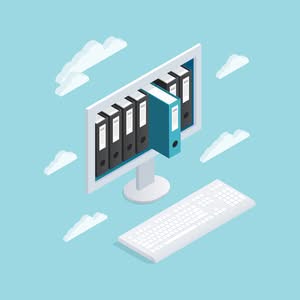
Many companies approach the digitalization of supplier management as if it were a simple tool swap: “let’s move from spreadsheets to software.” In reality, it’s something deeper. It means deciding that regulatory compliance, worker safety and the quality of supplier relationships are no longer issues handled “by hand” and entrusted to one person’s memory, but structured processes that are traceable and verifiable at any moment.
This shift in perspective is particularly relevant for companies subject to Italian workplace safety law, where the contracting employer is required to verify the technical and professional suitability of external companies. A dedicated platform, such as KATI developed by Len Solution Srl, turns this obligation from a source of constant anxiety into an automated, controlled process.
The hidden cost of manual management
When talking about digitalization, the most common question is: “how much does it cost?” But the more important question, often overlooked, is: “how much does it cost us NOT to do it?” The cost of manual management doesn’t show up as a single line in a budget; it spreads silently across many forms: staff hours spent chasing suppliers for expired documents, time wasted searching for a certificate in a shared folder right before an inspection, and the risk — more real than people think — of letting a supplier without the necessary safety requirements onto the premises.
On top of this comes a less tangible but equally real cost: reputation. A company that, in the event of an accident, cannot prove it properly verified the suitability of the supplier involved exposes itself not only to legal liability but also to image damage that is hard to repair.
Three benefits that go beyond simple efficiency
 Reduced legal risk. A digital platform logs every step — upload, validation, rejection, renewal — with a date and a responsible person. In the event of a dispute or inspection, the company can provide documented evidence that it acted with the diligence required by law.
Freeing up time for high-value work. Staff who currently spend hours chasing deadlines and manually checking documents can be redirected toward more strategic activities: supplier selection, negotiation, process improvement. Software doesn’t replace people; it frees up their time to do the work that really matters.
Scalability without proportional cost growth. Managing 20 suppliers with a spreadsheet is tiring but possible. Managing 200 the same way is simply impossible without errors. A digital platform, on the other hand, scales without a proportional increase in workload: the same effort needed to qualify 10 suppliers can be applied to 100 thanks to profiles, automated questionnaires and structured validation.
From compliance to competitiveness
Digitalizing supplier management isn’t just about “staying compliant.” Companies that have made this process smooth and efficient turn it into a real competitive advantage: faster qualification times for new suppliers, the ability to handle larger contracts without proportionally growing the staff dedicated to document control, and a reputation for reliability that carries weight in relationships with large clients — especially in public contracts, where demonstrating adequate supplier controls is often a participation requirement.
To understand in more detail how the process actually works — from the documents required to the color-coded system that measures compliance — it may help to read our technical guide on supplier document management, which covers the operational aspects of the process in depth.
How to navigate the choice of the right software
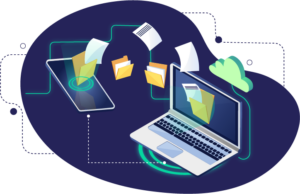 Once the decision to digitalize has been made, the next question is: which platform should you choose? Not all supplier management software is the same, and evaluation criteria — ease of use, support in your own language, regulatory compliance specific to your context, and the ability to adapt to organizational complexity — make a huge difference to the end result. We dedicated a specific article to this topic, with a genuine buyer’s guide, in our deep dive on workplace safety software.
KATI: the response to a concrete need
Len Solution Srl developed KATI precisely from this understanding: Italian companies need software designed for the national regulatory context, in Italian, with direct and competent support. To learn more about the platform, its main features and available modules, we invite you to read our full presentation of KATI, the Len Solution platform.
A gradual path, not a leap into the unknown
A common objection to digitalization is fear of change: “our suppliers are used to sending documents by email, how will they react to a new system?” Experience shows that adoption, when properly supported, is easier than people think: suppliers themselves benefit from a clear portal where they always know what to upload and what their compliance status is, eliminating the phone calls usually needed to clarify what’s missing.
Digitalizing supplier management is not a passing trend or a technological whim: it’s a choice that directly affects worker safety, the company’s legal standing, and the operational efficiency of everyone who works daily with external suppliers. Companies that have taken this step rarely go back, because they discover that the real value isn’t in eliminating a spreadsheet, but in building a control system that protects the company, its workers and its reputation.
If you want to understand how to digitalize the management of your suppliers with KATI, contact Len Solution Srl for a demo: our team is available for a free assessment of your needs.