Summary
There is a notification no safety manager wants to receive on a Friday afternoon: the one announcing an ASL inspection or a client audit for Monday morning.
The difference between a company that faces that news calmly and one that spends the weekend hunting for documents across email threads, shared folders and spreadsheets is measured in minutes — and it is built in the months beforehand, with a structured system.
KATI by LEN Solution is the web-based platform that turns every supplier safety audit into a simple formality: DUVRI generated per project, always-updated access log, complete supplier file downloadable in seconds, real-time audit-ready compliance dashboard.
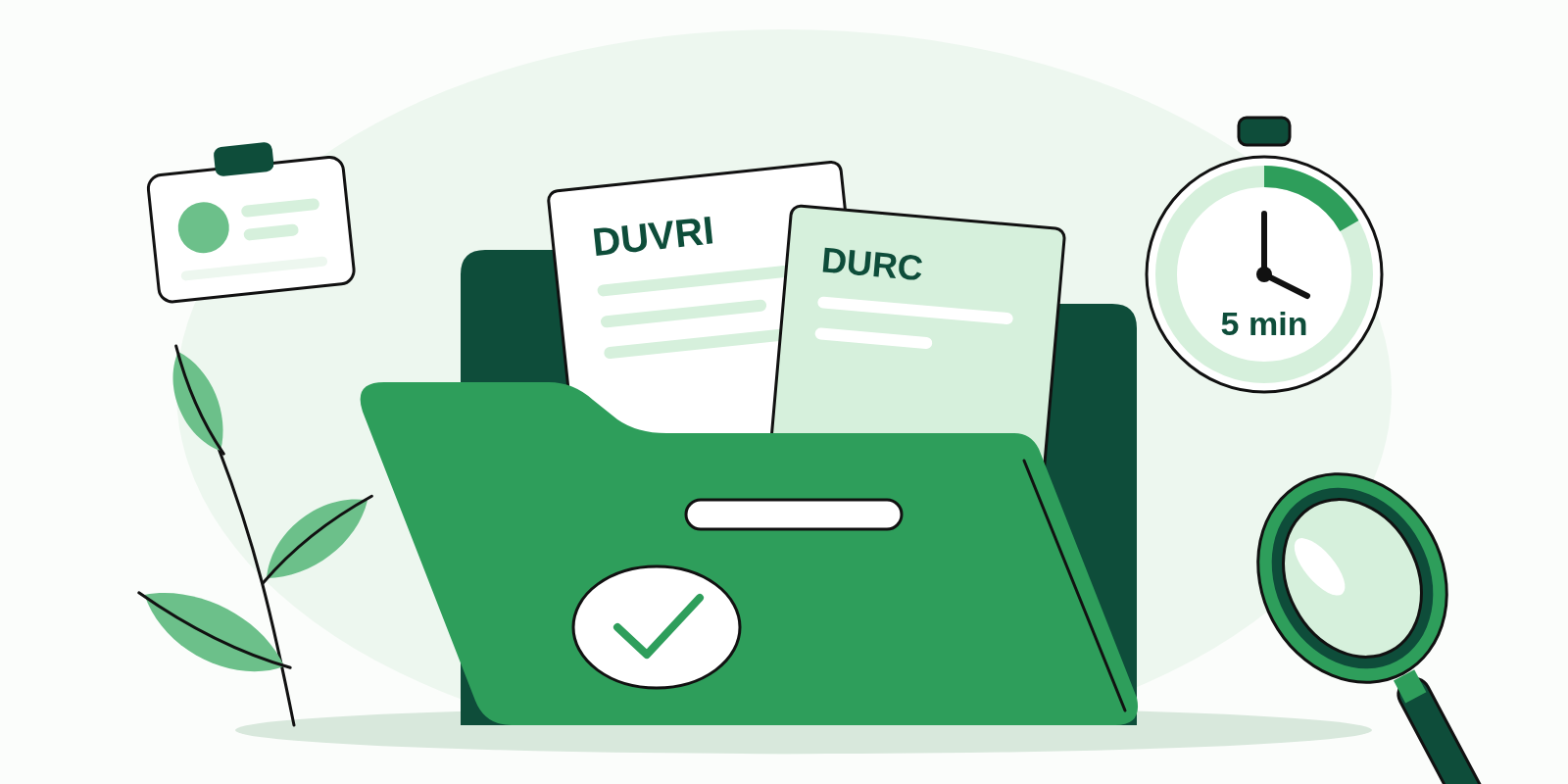
A supplier safety audit is an inspection — by a regulatory authority (e.g. ASL, Labour Inspectorate) or a commissioning client — of a company’s documentary compliance regarding the suppliers operating on its production site. Documents typically requested include: DUVRI (Interference Risk Assessment Document), DURC (Social Security Compliance Certificate), chronological access log, worker training certificates, and pre-qualification questionnaires. A company is considered audit-ready when it can produce all of this documentation in under 5 minutes.
There is a notification no safety manager wants to receive: the one announcing an imminent supplier safety audit — from an ASL authority, a Labour Inspectorate, or a major client requesting a document review before confirming a contract. At that moment, the quality of the supplier management system — invisible in the daily routine — suddenly becomes the only thing that matters.
This guide covers what actually happens during an audit, which documents are requested, why preparation is built in the months beforehand, and how KATI by LEN Solution allows companies to face any inspection with data ready and a demonstrably sound system.
What actually happens during a supplier safety audit
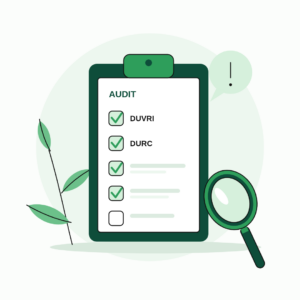 During a supplier safety audit, the inspector or auditor asks for documented evidence that the company has correctly verified the technical and professional suitability of the suppliers involved in on-site activities. The typical sequence of requests is always the same:
▸ DUVRI for every contract with interference risks, specific to the project in progress
▸ Up-to-date DURC for each active supplier on site
▸ Chronological access log with date, time, name and company for each worker
▸ Training certificates for the supplier’s workers, with expiry dates
▸ Completed pre-qualification questionnaires, with scores and attached documentation
It is not enough for these documents to exist: they must be retrievable in minutes, complete and consistent with one another. This is the moment that reveals the difference between a company managing suppliers with spreadsheets and one that has adopted a dedicated digital platform like KATI.
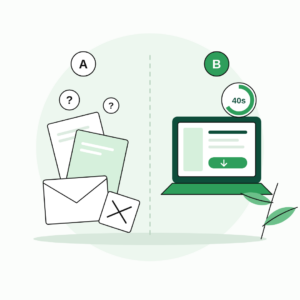
Two scenarios compared
| ❌ Managed with spreadsheets and email
✗ DURC searched across three email inboxes ✗ Generic 2022 DUVRI, never updated ✗ Access log non-existent or on paper ✗ Training: files scattered across desktops ✗ Every search minute reduces credibility |
✅ Managed with KATI (LEN Solution)
✓ DURC on the supplier record, downloaded in 10 sec. ✓ DUVRI generated per project, always current ✓ Access log exportable as PDF in 1 click ✓ Certificates in centralised digital archive ✓ Auditor perceives control and reliability |
The documents KATI makes instantly available
 Genuinely audit-ready supplier compliance software must allow you to produce in a few clicks at least five document categories:
- Complete supplier file: all uploaded documents, with full validation history and current compliance status
- Project-specific DUVRI: generated from a structured risk catalogue, consistent with ongoing activities, signed by all involved employers
- Chronological access log: PDF-exportable, organised by date, company and worker name
- Pre-qualification questionnaires: with scores, answers and attached documentation for every supplier
- Aggregated compliance dashboard: compliance status of all active suppliers in a single view, proving systematic rather than occasional management
For a deeper look at how daily document collection works, see our guide on supplier document management and our guide on supplier qualification with questionnaires and validation.
DUVRI and access log: the two most requested documents during inspections
 Among all the documents an inspection may request, the DUVRI and access log are the most frequently checked, because they directly address interference risk management and on-site presence traceability. The most common gap: a generic DUVRI drafted once for a contract and never updated as the work or risks evolved. With KATI, the DUVRI is generated for each project from a structured, always-current risk catalogue — our guide on the digital DUVRI and automatic generation explains the process in detail.
The second most common gap: an access log that does not exist or is kept on paper, making real-time consultation impossible. With KATI integrated into corporate access control, every entry and exit is automatically recorded and the log is PDF-exportable for any period requested by the inspector.
Audit readiness is built day by day, not the day before
A company does not prepare for a supplier safety audit the moment it receives the inspection notice, but in the months before, through the quality of its daily management. A system that correctly collects documents, validates them rigorously, and automatically generates project-specific DUVRIs is already building — day after day — the documented evidence that will be needed in the event of a check.
This is the founding principle of KATI by LEN Solution: not an emergency tool to activate before an inspection, but a daily operating system that makes every audit a simple formal check of an already solid process. The company is audit-ready by design, not by last-minute preparation.
When a supplier is not compliant: transparency as strategy
Good compliance software is not just for passing an inspection — it is also for properly managing situations where a supplier turns out to be genuinely non-compliant. In these cases, transparency is the best strategy.
Being able to demonstrate that the system identified the non-conformity, denied the supplier access (or should have), and triggered document recall procedures shows the inspector that the company has a functioning control system — even when specific issues arise. An auditor prefers to see a system that identifies and manages exceptions over a company that simply claims ‘everything is fine’ without being able to prove it with historical data, like the data described in our guide on supplier performance indices and KPI dashboards.
Internal audits: a tool for improvement, not just verification
 Not all audits come from outside. Many companies run periodic internal audits to verify the soundness of their supplier management system before someone else does. With KATI, these checks move from a burdensome task — manually gathering scattered information — to a simple review of ready-made reports, allowing the safety team to focus on analysing results rather than collecting data.
Kati: safety management for your business
A supplier safety audit should never be a moment of panic — it should be a simple formal check of an already solid system. The difference between the two situations is built in the months beforehand, through the adoption of a digital platform capable of automatically collecting, validating and organising all necessary documentation.
LEN Solution designed KATI precisely to turn every potential inspection into an opportunity to demonstrate, with concrete and instantly available data, the soundness of your supplier management system. Request a free demo and discover how KATI adapts to your organisation’s specific needs.
Frequently asked questions about supplier safety audits
How far in advance should a company prepare for a supplier safety audit?
Ideally, preparation is not a one-time event triggered by an inspection notice but an ongoing byproduct of daily document management. A company using a structured system is audit-ready at all times, because documentation is collected and validated continuously rather than assembled at the last minute.
Which documents are most commonly requested during an inspection?
The most frequently requested documents are the DUVRI, DURC, access log and supplier workers’ training certificates. An outdated or generic DUVRI is the most common gap identified by inspectors. Our guide on the digital DUVRI explains how to generate it correctly for each project.
Does a non-compliant supplier during an inspection expose the company to penalties?
Yes. The commissioning company’s responsibility includes verifying the technical and professional suitability of suppliers under D.Lgs 81/08. A non-compliant supplier operating on site can result in direct penalties for the commissioning company, even in the absence of an accident. Having a system that identified and managed the non-conformity is an important line of defence.
Does KATI work for companies with only a few suppliers?
Yes. KATI is fully scalable and adapts to large organisations with hundreds of suppliers as well as SMEs with a handful of external contractors. For a tailored assessment, request a free demo.